Key Takeaways
- A safe baby photoshoot depends on rigorous studio hygiene, precise temperature control, and a hazard-free setup — not just a pretty backdrop.
- Only a small fraction of photographers hold formal newborn safety training; always verify credentials, portfolio evidence, and sanitisation protocols before booking.
- Preparing well before your session — from feeding timing to what to bring — makes the experience smoother, safer, and more enjoyable for your baby and your family.
Why Baby Photoshoot Safety Is Non-Negotiable
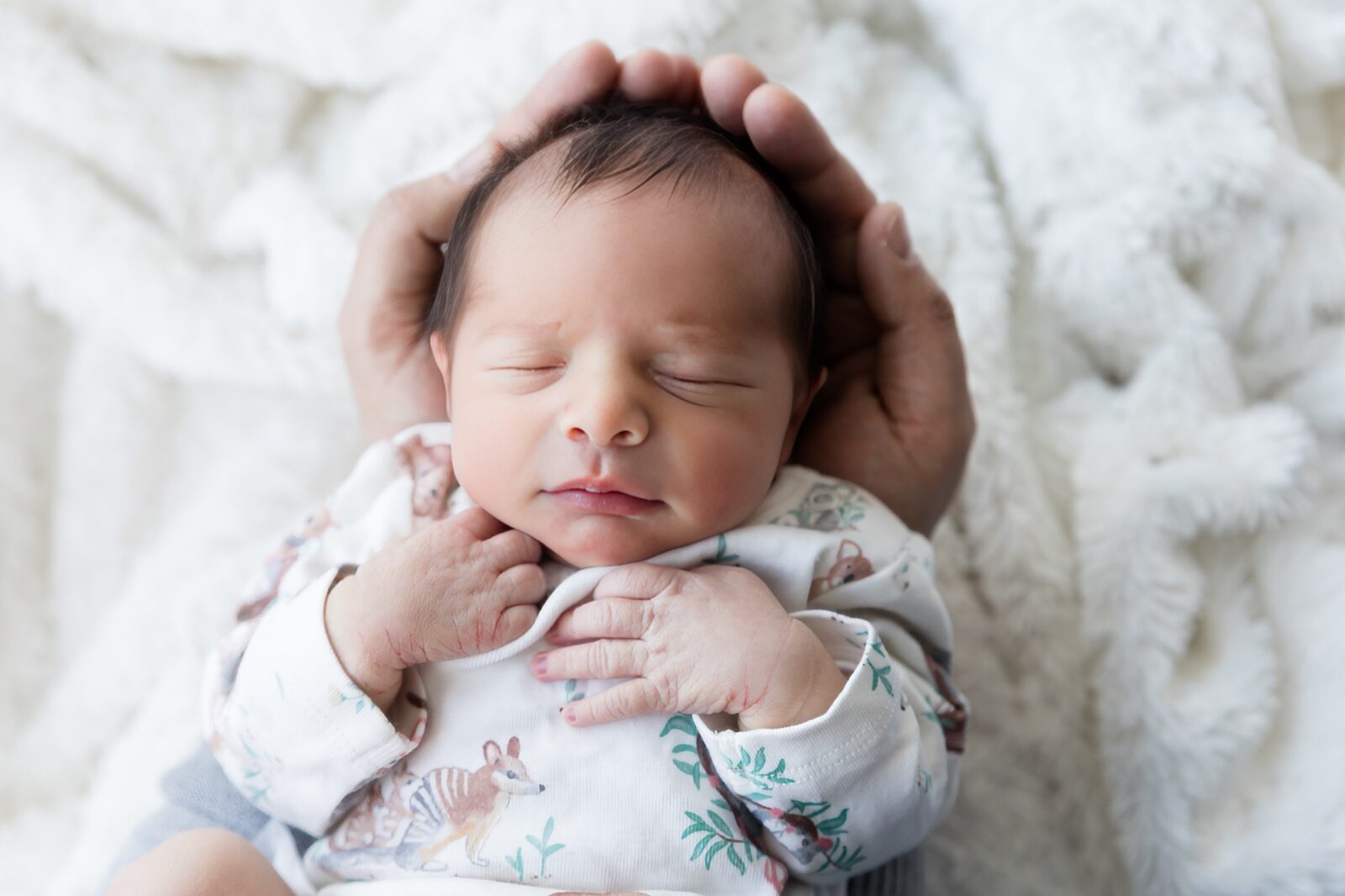
Newborns are extraordinary little beings, but they are also profoundly vulnerable. Their immune systems are still developing, their body temperature regulation is immature, and their necks and spines need constant, careful support. A photoshoot environment that is not purpose-built and managed with these realities in mind poses genuine risks. Safety in a newborn studio is not simply a checklist — it is a culture. A photographer who treats it as an afterthought is not the right photographer for your family. ### The Difference Between a Snapshot and a Safe Session Any camera can take a photo. But the posing techniques used in the iconic "curled-up" newborn images — tucked elbows, crossed legs, chin-on-hands — require precise training and, in many cases, two sets of hands. Images that appear to show a sleeping baby entirely unsupported are almost always composites: multiple safe frames blended in post-production. If a photographer cannot explain how they achieve a pose safely, that is a red flag worth heeding. ---Creating a Clean, Hazard-Free Studio Environment
Cleanliness in a newborn studio goes well beyond a quick wipe-down between clients. According to guidance from health authorities, newborns are significantly more susceptible to infections in their earliest weeks, which means every surface, prop, and textile in the shooting space matters. ### Hygiene Standards We Hold Ourselves To At Faithful Photography, our cleaning protocol between every session includes:- Machine-washing all wraps, fabrics, and soft props at high temperature
- Scrubbing hard surfaces, posing beanbags, and prop containers with detergent and water, followed by hospital-grade disinfectant spray
- Airing the studio before each session to ensure fresh circulation
- Requiring all studio staff and assistants to wash hands before touching your baby
- No prop is used unsupported if a baby is placed inside or on top of it
- A trained team member is always within arm's reach of the baby
- We never leave a baby unattended on an elevated surface, even for a moment
Temperature Control: The Detail Most Parents Don't Think About
Newborns cannot regulate their own body temperature the way adults do. A studio that feels comfortable to a photographer in a long-sleeve shirt may be genuinely too cold for a baby who has been unwrapped for posing. Equally, a studio that has been warmed up too aggressively can cause overheating, which carries its own risks. ### Getting the Temperature Right The ideal ambient temperature for a newborn photoshoot falls in the range of 20–24°C. At our studios in Glen Alpine and Gledswood Hills, we monitor room temperature with a calibrated digital thermometer throughout every session, not just at the start. Watch for these signs that your baby may be too warm during a session:- Flushed or red cheeks
- Small beads of sweat on the forehead or scalp
- Unusual restlessness or distress
- Mottled or blotchy skin tone
- Cool extremities (fingers, toes, tip of the nose)
- A consistently unsettled or crying response when unwrapped
Safe Handling Techniques for Newborn Poses
This is where specialised newborn photography training becomes absolutely critical. Many of the poses you see in stunning newborn galleries — the tucked "froggy" pose, the wrapped basket shot, the chin-on-hands — look effortless but require precise technique to execute without placing any strain on a baby's delicate spine, neck, or hips. ### What Proper Newborn Handling Looks Like- Head and neck support at all times — even during brief transfers between poses
- Slow, deliberate movements — no quick repositioning, no sudden adjustments
- Following the baby's lead — if a pose is being resisted, we stop and rethink; we never force a position
- Using composite techniques for any image where two-handed support is required in the final frame
- Continuous communication with parents — you are always invited to speak up if something looks or feels uncomfortable
"The most important thing in our studio is never the shot — it is the baby. Every pose, every prop, every transition is only ever attempted when we are completely confident it is safe. There is no image worth a moment of risk."---
How to Find a Qualified Newborn Photographer in Sydney
The newborn photography industry in Australia is largely self-regulated, which means the responsibility of vetting a photographer falls squarely on you as a parent. According to data from the Professional Photographers of America, only a small minority of photographers have completed formal newborn safety training. The figures are similar in Australia. This matters enormously. ### Credentials to Ask About When enquiring with any photographer — whether you are looking at Campbelltown photographers, searching the broader Macarthur region, or exploring studios further afield — ask directly:- Have you completed a formal newborn safety course? Which one, and when?
- Are you certified with any professional photography body?
- Do you work with a second spotter during posing?
- What sanitisation protocol do you follow between sessions?
- Are baby's heads and necks visibly supported or naturally resting (not craned or compressed)?
- Do props look stable and age-appropriate?
- Does the baby appear genuinely settled and comfortable, or posed and distressed?
Ready to Book a Safe, Beautiful Newborn Session?
At Faithful Photography, every session is run by trained specialists with formal newborn safety qualifications — so you can focus on the memories while we handle everything else.
Discussing Safety Protocols with Your Photographer Before the Day
One of the most effective things you can do as a parent is have a direct conversation about safety before your session date. This is not overstepping — it is exactly what a reputable photographer expects and welcomes. ### Questions Worth Asking in Advance- What happens if my baby becomes distressed during posing?
- How do you handle sessions if the baby is unwell?
- Is there a minimum or maximum age for certain poses?
- Will you pause the session if my baby needs a feed or a nappy change?
How to Prepare for Your Baby's Photoshoot Session
Preparation on the parent's side makes a significant difference to how smoothly and safely a newborn session runs. A well-fed, recently changed, warm baby is a settled baby — and a settled baby means less handling, less repositioning, and a more relaxed experience all round. ### Before You Arrive- Feed your baby approximately 30–45 minutes before your session start time, not immediately before — a very full baby can be uncomfortable during posing
- Avoid scheduling around nap time if possible; a deeply sleepy baby is easiest to settle, so align the session with a natural sleep window
- Dress baby in loose, easy-to-remove clothing — press-stud bodysuits are ideal; avoid anything that leaves tight elastic marks on delicate skin
- Bring comfort items — a dummy if your baby uses one, a favourite wrap or muslin, and a spare change of everything (for baby and you)
- Contact us if your baby is unwell — we will always reschedule rather than push ahead with a sick baby
Emergency Preparedness in a Professional Studio
No responsible newborn photographer operates without a plan for the unexpected. Emergencies in a baby photoshoot context are rare, but they are not impossible — and a prepared studio is a safe studio. ### What Every Studio Should Have Ready- A fully stocked first aid kit with infant-specific supplies
- Emergency contact details including the baby's paediatrician, on file before the session begins
- Knowledge of the nearest emergency department or urgent care centre to the studio
- A protocol for managing sudden changes in a baby's condition — breathing, colour, temperature
Beyond Newborns: Safety Principles Across All Baby Sessions
The safety framework that applies to newborn sessions extends in important ways to other milestone sessions too. Whether you are planning a cake smash photography in Sydney celebration for your baby's first birthday or a maternity photography in Sydney session in the lead-up to their arrival, the same principles of environment, handling, and preparation apply. For cake smash sessions in particular, safety considerations include food allergen awareness, non-toxic prop materials, and ensuring the studio surface is clean and stable. Our detailed guide on Cake Smash Studio Setup: Designing Sweetly Memorable Moments covers what parents can expect from a professionally run first birthday session. ---Frequently Asked Questions
What is the safest age for a newborn photoshoot?
The optimal window for a newborn session is between 5 and 14 days after birth. During this time, babies are still sleepy, flexible, and easy to settle into the curled poses that define newborn photography. After around three weeks, babies become more alert and less comfortable being unwrapped and repositioned for extended periods. If you miss this window, we can still create beautiful images — we simply adapt our approach to suit your baby's age and temperament.
Are the "floating" or "froggy" poses actually safe?
Yes — when executed correctly by a trained photographer. These poses are composites: two or more safe, supported frames that are carefully blended in post-production. In the individual frames, the baby is always fully supported by a spotter's hands, which are then removed digitally. If a photographer claims to achieve these poses in a single, unsupported shot, that is a serious concern and worth questioning directly.
What should I do if my baby is unsettled during the session?
Nothing unusual — this is completely normal and a well-prepared studio will simply pause, feed, change, or settle your baby before continuing. Newborn sessions at Faithful Photography are scheduled with generous time allowances for exactly this reason. We never rush, and we never push through a distressed baby. If your baby has a genuinely difficult day, we will rebook at no extra cost.
How do I know if a photographer has proper newborn safety training?
Ask them directly and ask for specifics — the name of the course or certifying body, the year they completed it, and whether they hold current infant first aid certification. Reputable photographers will answer without hesitation. Also check their portfolio closely: settled, naturally positioned babies and age-appropriate props are a strong visual indicator of a safety-conscious approach.
Can siblings or parents be included in a newborn session safely?
Absolutely, and it is one of the most meaningful things you can capture during this season. Sibling and parent involvement is managed carefully — young children are never asked to hold the newborn unsupported, and family poses are structured so that the baby is always in the safest position. Browse our gallery for examples of how beautifully these moments come together. You might also find inspiration in our family photoshoots in Sydney portfolio.
What happens if my baby is unwell on the day of the session?
Please contact us as early as possible and we will reschedule your session without any fuss or penalty. A sick baby should never come into a shared studio environment — for their own recovery and for the wellbeing of other families who visit the space. We would far rather rebook than have either of you push through on a difficult day.
Visit Faithful Photography Today
Our award-winning studios in Glen Alpine and Gledswood Hills serve families across Campbelltown, Camden, Narellan, and the wider Macarthur region — with every session grounded in rigorous safety practice and genuine care for your baby. When you are ready to capture this fleeting season beautifully and safely, we are here.