Key Takeaways
- Soft, diffused light is the single biggest factor in achieving flattering, vibrant cake smash images — and it's entirely within your control.
- Understanding the difference between natural light, continuous LEDs and strobes lets you adapt to any studio environment or time of day.
- Combining directional techniques with the right modifier kit transforms a sticky toddler moment into a wall-worthy portrait.
Why Lighting Is the Game-Changer in Every Cake Smash Session
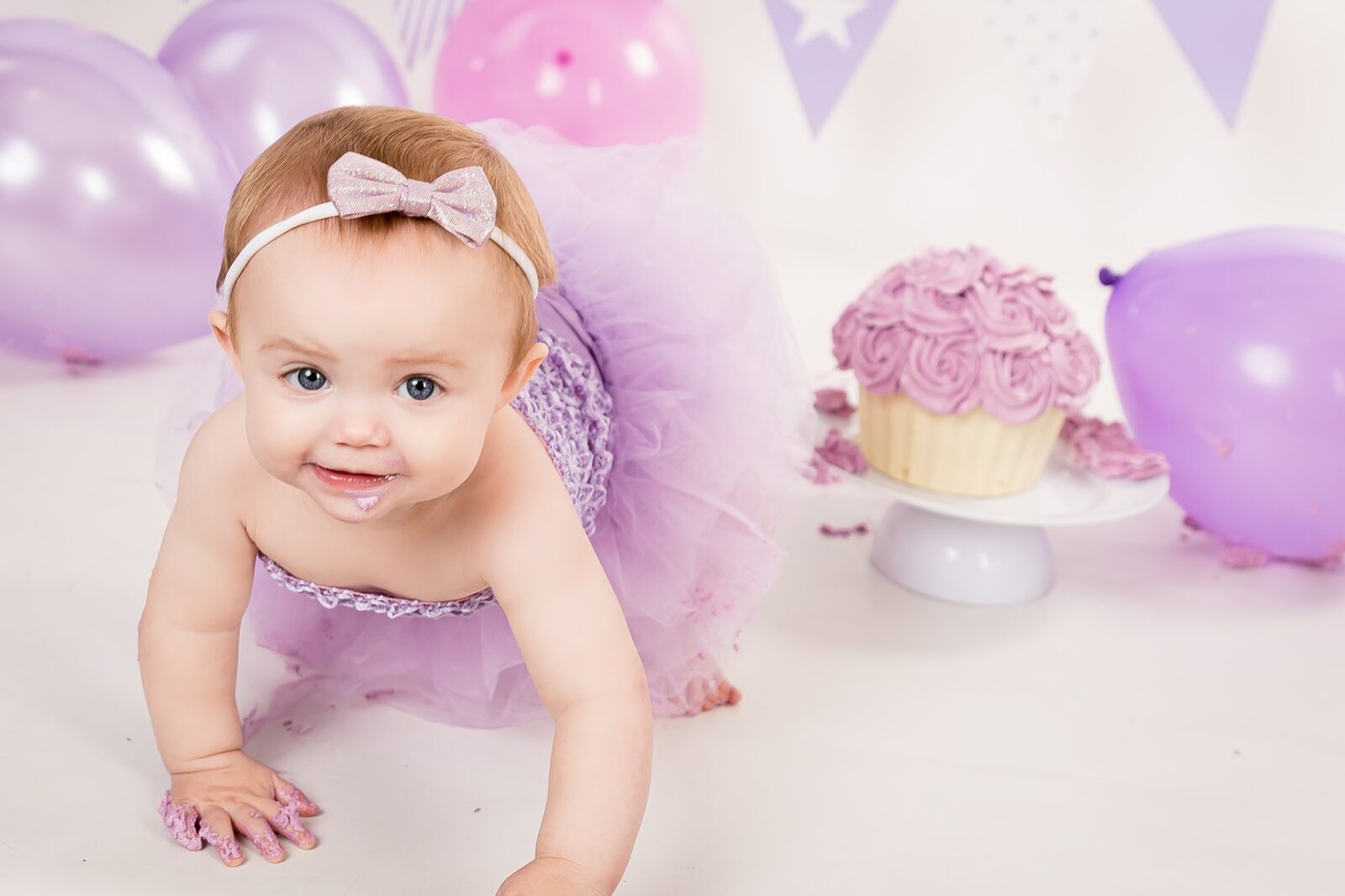
A cake smash session is controlled chaos. You have a one-year-old, a sugary prop that is about to be destroyed, and a very narrow window before a meltdown. In that environment, lighting cannot be an afterthought — it has to be locked in before the baby sits down. Good light does several things simultaneously. It smooths skin texture on those perfectly chubby cheeks. It adds catchlights — those tiny white sparks of life — to wide, curious eyes. It separates your subject from the background so the entire image has depth and dimension. Poor light does the opposite. Harsh overhead sources create unflattering shadows under eyes and chins. Flat, undirected light makes the whole frame feel like a snapshot rather than a portrait. Neither outcome does justice to a milestone this significant. That is why every cake smash photography session at our South-West Sydney studios begins with a deliberate, tested lighting plan — not a guess. ---Natural Light vs Artificial Light: Finding the Right Foundation
Before reaching for any piece of gear, the first decision is whether to anchor your session around natural light, artificial light, or a blend of both.The Case for Natural Light
Large north-facing windows produce a gorgeous, wrapping quality of light that is hard to replicate artificially. The tones are warm and dimensional, and babies tend to naturally turn toward the brightness, giving you beautiful face-lit frames with very little direction. The limitation is consistency. A session booked for 10 am in the Macarthur region in winter might be flooded with golden light. The same session on an overcast afternoon in Camden, NSW can drop two full stops — and you cannot ask a toddler to wait while you troubleshoot exposure.The Case for Artificial Light
Artificial lighting gives you absolute consistency regardless of season, time of day, or weather. Whether the session is at 9 am or 3 pm, the light looks identical. That consistency is enormously valuable when you are wrangling a distracted one-year-old. The trade-off is a learning curve. Artificial sources can feel clinical until you learn to shape and diffuse them properly. The good news: once you do, the results are repeatable session after session.Our Recommendation
- If you are new to cake smash photography, start with a large, north-facing window and a simple reflector. Master the natural-light look first.
- Once you are comfortable with exposure and composition, introduce a single continuous LED light as a fill source.
- Graduate to a full two- or three-light artificial setup as your confidence and client volume grows.
The Magic of Soft Light for Smash Cake Photography
Soft light is the workhorse of professional baby and toddler photography. It wraps around small features gently, minimises unflattering shadows, and gives images that luminous, almost painterly quality that makes parents catch their breath.What Makes Light Soft?
The softness of a light source is determined by its size relative to the subject. The larger the light source appears compared to your subject, the softer it becomes. A bare speedlight is small and therefore hard. That same speedlight bounced into a 100 cm octabox becomes enormous relative to a baby — and the light wraps beautifully.How to Achieve Soft Light in Your Setup
- Move the light closer. Halving the distance between light and subject dramatically increases apparent light-source size and softness.
- Use a large modifier. Octaboxes (90 cm or larger), strip boxes, and large umbrellas all increase surface area and soften output.
- Add a diffusion layer. Double-diffused softboxes, or a simple white shoot-through umbrella, scatter light further and eliminate any remaining hotspots.
- Bounce off a wall or ceiling. In a small studio, a white wall behind you acts as a giant fill panel at no cost whatsoever.
Directional Lighting Techniques That Transform Results
Where you position a light source relative to your subject is just as important as the quality of that light. Even a perfectly soft source placed poorly will produce flat or unflattering results.Front Lighting
The light sits directly behind the camera, pointing straight at the subject. It is flattering and forgiving, which is why it is often recommended for beginners. The downside is that it can feel two-dimensional — shadows fall behind the subject and disappear, leaving the image without depth.Side Lighting (45-Degree Placement)
Side lighting at roughly 45 degrees to the subject is the sweet spot for most cake smash sessions. It creates gentle shadow on one side of the face, adding dimension and sculpting those adorable baby features without being harsh. It is the most versatile starting position and works beautifully whether the light is natural or artificial.Backlighting and Rim Lighting
Placing a light source behind the subject creates a glowing rim around the hair and shoulders — particularly magical when photographing fine baby hair. The challenge is controlling exposure so the subject does not become a silhouette. Use a reflector or fill light to bounce light back into the face. Experiment freely. Every baby is different, every set slightly different, and the correct answer is the one that produces the most beautiful image of that child in that moment. ---"The difference between a snapshot and a portrait often has nothing to do with the camera — it is entirely about where the light is coming from and how it has been shaped."---
Balancing Multiple Light Sources for Depth and Dimension
A single light source is a great starting point, but it creates one-sided illumination. Adding a second source — whether a reflector, a fill light, or a backlight — gives your images the layered, three-dimensional quality that separates professional portraits from competent snapshots.The Natural Light Plus Reflector Combination
This is arguably the most powerful and accessible setup available. Use a large window as your key light — the main, dominant source. Position the baby so the window light falls at roughly 45 degrees. Then place a large white reflector or foam core panel opposite the window, roughly a metre from the subject, to bounce light back into the shadow side of the face. The result is natural, luminous light on the key side with enough fill to retain detail in the shadows. It looks expensive, and it costs almost nothing extra.The Three-Light Artificial Setup
When natural light is unavailable or inconsistent, a three-light arrangement gives you full creative control:- Key light: Your main large softbox or octabox, positioned at 45 degrees to the subject.
- Fill light: A second, lower-powered source on the opposite side to lift shadow density — typically set at one-third to half the power of the key.
- Backlight / hair light: A small source behind and above the subject to create rim separation and lift the subject off the background.
Ready to Book a Professional Cake Smash Session?
At Faithful Photography, our South-West Sydney studios in Glen Alpine and Gledswood Hills are fully lit, styled, and ready to create first-birthday portraits your family will cherish forever.
Essential Lighting Equipment for Cake Smash Sessions
You do not need an enormous kit to achieve professional results. The right few pieces of gear, used well, will outperform a poorly understood collection of expensive lights every time.Softboxes and Octaboxes
Softboxes are non-negotiable for baby and toddler photography. A 90 cm or larger octabox is the single most versatile modifier in a cake smash studio. It produces soft, even, flattering light that works beautifully at close range. Position your softbox with the centre slightly above the baby's head height and angled downward at roughly 45 degrees. This mimics the quality of natural window light and is universally flattering on small faces.Reflectors
A 5-in-1 collapsible reflector is one of the most cost-effective tools in studio photography. The white surface provides gentle fill without altering colour temperature. Silver adds punch and is useful when the fill needs to be more prominent. Gold warms the shadow side beautifully for a cosy, intimate feel. If you are shooting solo, a reflector stand is essential. Position it opposite your key light and adjust the angle until the shadow side of the subject reads the way you want it.Continuous LED Panels vs Strobes
For cake smash photography specifically, continuous LED panels offer a significant practical advantage: what you see is what you get. You can watch in real time how the light falls across the baby's face and adjust immediately — critically important when your subject has a very short attention span. Look for LED panels that are:- Dimmable across a wide range
- Colour-adjustable (bi-colour or full RGB) to match mixed lighting environments
- Cool to the touch, for safe use around infants
- Quiet, with no cooling fan noise to startle or distract babies
Practical Lighting Setup Tips to Use on the Day
Understanding lighting theory is one thing. Translating it under session pressure — with frosting flying and a determined one-year-old doing the unexpected — is another matter entirely.Set and Test Before the Baby Enters the Frame
Never adjust your lighting setup while the child is seated in front of the set. Use a stand-in — a toy, a cushion, your assistant — and get your exposure, direction and modifier placement locked in before the session begins. Once the baby is down, your full attention belongs on them.Shoot Tethered Where Possible
Tethered shooting sends images directly to a laptop screen in real time. Even a large laptop monitor shows you lighting issues — uneven fill, blown highlights, muddy shadows — that a small camera LCD will not reveal. Catching problems early saves a session.Account for the Cake's Reflectivity
White fondant and white buttercream reflect a surprising amount of light back toward the subject. In some setups, this acts as a free fill source and is genuinely helpful. In others — particularly when using strong side lighting — it can create unexpected hotspots. Check your first few frames carefully once the cake is in the scene.Keep the Background in Mind
The background needs to be lit separately from the subject in most setups. A soft white backdrop that is underlit will go grey. Over-lit, it will blow out and lose texture. A good rule: expose the background roughly one stop brighter than the subject to maintain a clean, bright, airy feel — or one stop darker for a more moody, dramatic look. For outfit inspiration that works with your chosen lighting palette, see our guide to cake smash outfit ideas for a playful first birthday. ---Lighting for Cake Smash Photography Across the Macarthur Region
Faithful Photography serves families across South-West Sydney — from Campbelltown and Camden to Narellan, Gledswood Hills and Glen Alpine. Our two studio locations are purpose-built for controlled, consistent lighting that removes the guesswork from every single session. Both studios feature large softbox rigs, adjustable LED continuous lighting, and fully styled cake smash sets that are refreshed each season. Families driving in from Gregory Hills, Oran Park, Harrington Park and Mount Annan will find the studio environment specifically designed to make lighting — and therefore great results — effortless. Every session is photographed by an experienced team that has refined these exact techniques across thousands of smash cake sessions. You bring the baby and the excitement. We handle the light. ---Frequently Asked Questions
What lighting tips make the biggest difference for cake smash photography results?
The single most impactful change most photographers can make is using a larger light modifier positioned closer to the subject. A 90 cm octabox at close range produces dramatically softer, more flattering light than any small or bare source. Combine this with a reflector opposite to fill the shadow side, and the quality of your images will improve immediately.
Is natural light or studio lighting better for cake smash sessions?
Both can produce beautiful results, and the best choice depends on your space and experience level. Natural light from a large window is soft, flattering, and easy to work with — but it is weather-dependent and changes throughout the day. Artificial studio lighting gives you complete consistency and creative control, which is especially valuable when you have a limited window with a toddler. Professional studios like Faithful Photography use purpose-designed artificial setups to guarantee results every time.
Are continuous lights or strobes better for photographing babies during a cake smash?
For most cake smash work, continuous LED lights are the more practical choice. They allow you to see exactly how the light falls in real time, making adjustments fast and intuitive — which is essential when a baby's attention moves quickly. Strobes produce sharper freeze-frame results and are excellent for capturing high-action moments like the first big smash, but require more experience to position well without a live preview. Many photographers use continuous lights for the setup and slower moments, and strobes for action.
How should I light the background separately from the baby during a cake smash session?
Lighting the background independently from your subject gives you much greater control over the final look. A dedicated backlight or background light — positioned behind the subject and aimed at the backdrop — lets you adjust the brightness of the background independently. For a bright, airy result, expose the background roughly one stop brighter than the subject. For a more dramatic, intimate feel, keep it one stop darker. Never rely on subject lighting to illuminate the background — the results are inconsistent and difficult to control.
Does Faithful Photography's studio handle all the lighting setup for cake smash bookings?
Yes — completely. When you book a cake smash session at our Glen Alpine or Gledswood Hills studios, every aspect of the lighting environment is prepared and tested before you arrive. Our team has refined the setup across thousands of sessions, and you will never need to think about light placement, modifiers, or exposure. Your only job is to enjoy watching your little one celebrate their first birthday.
What other photography services does Faithful Photography offer in South-West Sydney?
Faithful Photography offers a full range of portrait and milestone sessions, including newborn photography, maternity photography, family portrait sessions, and corporate photography across South-West Sydney and the Macarthur region. All sessions are photographed in our professional studio environments with the same care and attention to lighting detail described in this guide.
Visit Faithful Photography Today
Our Glen Alpine and Gledswood Hills studios are fully equipped to make your little one's first birthday cake smash a beautifully lit, professionally captured milestone. Serving Campbelltown, Camden, Narellan and the wider Macarthur region — we would love to meet your family.