
Key Takeaways
- The side profile and 45-degree angle are the two most universally flattering stances for pregnancy photography poses — they show the bump in three dimensions and keep your silhouette long and elegant.
- Intentional hand placement, natural movement, and a few seconds of settling into each pose transforms a stiff shot into something genuinely radiant and emotionally connected.
- Comfort drives authenticity — the right furniture, a relaxed environment, and an experienced photographer make the difference between a forced smile and one that's completely, unmistakably real.
There's a particular moment that happens in almost every maternity session: the expectant mother walks in, absolutely stunning, and then freezes the instant the camera appears. Hands hover in mid-air. Hips angle left, then right, then back to left. The whole body seems to ask: "What exactly am I supposed to do with myself?" If that sounds familiar, you are not alone — and the good news is that knowing how to pose for stunning pregnancy photography is not about yoga-level flexibility or having modelled before. It is about a handful of elegant, practical techniques that flatter your changing silhouette and let the real subject — the bump — take the spotlight it deserves.
At Faithful Photography, our studios in Glen Alpine and Gledswood Hills have welcomed hundreds of expectant mothers from across South-West Sydney and the Macarthur region, including Campbelltown, Camden, Narellan, and beyond. We have learned, through session after session, which stances make the belly sing and the rest of you relax — and which ones quietly do the opposite. This guide shares all of it with you.
---Why Posing Matters More Than You Think in Maternity Photography
Photography is light, timing, and geometry — and the geometry of how you stand shapes every single frame. A well-chosen pose does three things at once: it flatters your silhouette, it reveals emotional connection, and it gives your body (and your arms, which are apparently the hardest thing to know what to do with) a sense of purpose.
Poor posing, by contrast, can make a beautiful bump look flat, make a relaxed woman look tense, and turn what should be a treasured keepsake into something you'd rather not frame. The difference between the two is rarely talent — it is almost always guidance.
The Role of Your Photographer
A skilled maternity photographer is part artist, part director. At Faithful Photography, we don't hand you a list of poses and wish you luck — we guide you through each one, adjust your weight distribution, and watch for the micro-moments of authentic expression that make a great image. Our maternity photography in Sydney sessions are designed around your comfort from the very first minute.
Before we even open the lens, we talk. We ask about your preferences, your relationship with your body right now, and what you want these images to feel like in twenty years. That context shapes every creative decision we make.
---The Side Profile: The Foundation of Flattering Pregnancy Photography Poses
If there is one pose that belongs in every maternity session, it is the side profile. It is the gold standard — and not just because it looks beautiful. It actually shows the bump in three dimensions, giving the belly fullness and depth that a straight-on shot simply cannot achieve.
How to Execute It Properly
- Stand perpendicular to the camera — your shoulder closest to the lens, your other shoulder pointing away.
- Place your feet hip-width apart, then pop the front foot forward just slightly. This creates a gentle S-curve through your body and prevents the stiff, mannequin look that plagues so many self-directed shots.
- Rest one hand on the underside of the bump and let the other fall naturally at your side or drift through your hair. Natural movement reads infinitely better than forced symmetry.
- Soften your gaze — downward toward the bump, across to your partner, or out toward a light source. Avoid staring directly into the lens unless your photographer specifically asks for it.
That hand placement on the belly is not merely decorative. It signals connection and confidence, and it gives your arms a visual purpose rather than letting them hang with nowhere to go.
When to Use the 45-Degree Variation
If a pure side profile feels exposing, the 45-degree angle is your best friend. Turn so the camera sees roughly equal parts front and side — enough of the bump for fullness, enough of the front for expression. It is the most universally flattering angle in portrait photography and works across virtually every body shape and bump size.
What you want to avoid is standing dead square-on to the camera. Facing straight at the lens compresses everything and can make areas you are less focused on appear heavier. The bump itself loses its sculptural quality. Reserve the full-frontal only when your photographer has a very specific compositional reason for it.
---Cradling Poses: Creating Emotional Depth in Every Frame
If the side profile is about form, cradling poses are about feeling. They communicate something words cannot: tenderness, protection, and that particular kind of wonder that comes with knowing a whole new person is arriving soon.
Solo Cradling
Cup your belly from underneath with both hands, fingers interlaced, and let your gaze drop downward. No forced smile required. The power of this pose comes from its honesty — it is a gesture most expectant mothers make privately, dozens of times a day, and when a camera catches it, the result is unmistakably real.
Tilt your chin very slightly toward your chest — not so far it creates a double chin, but enough to soften the expression and create that contemplative look that photographs beautifully in both natural and studio light.
Partner Cradling
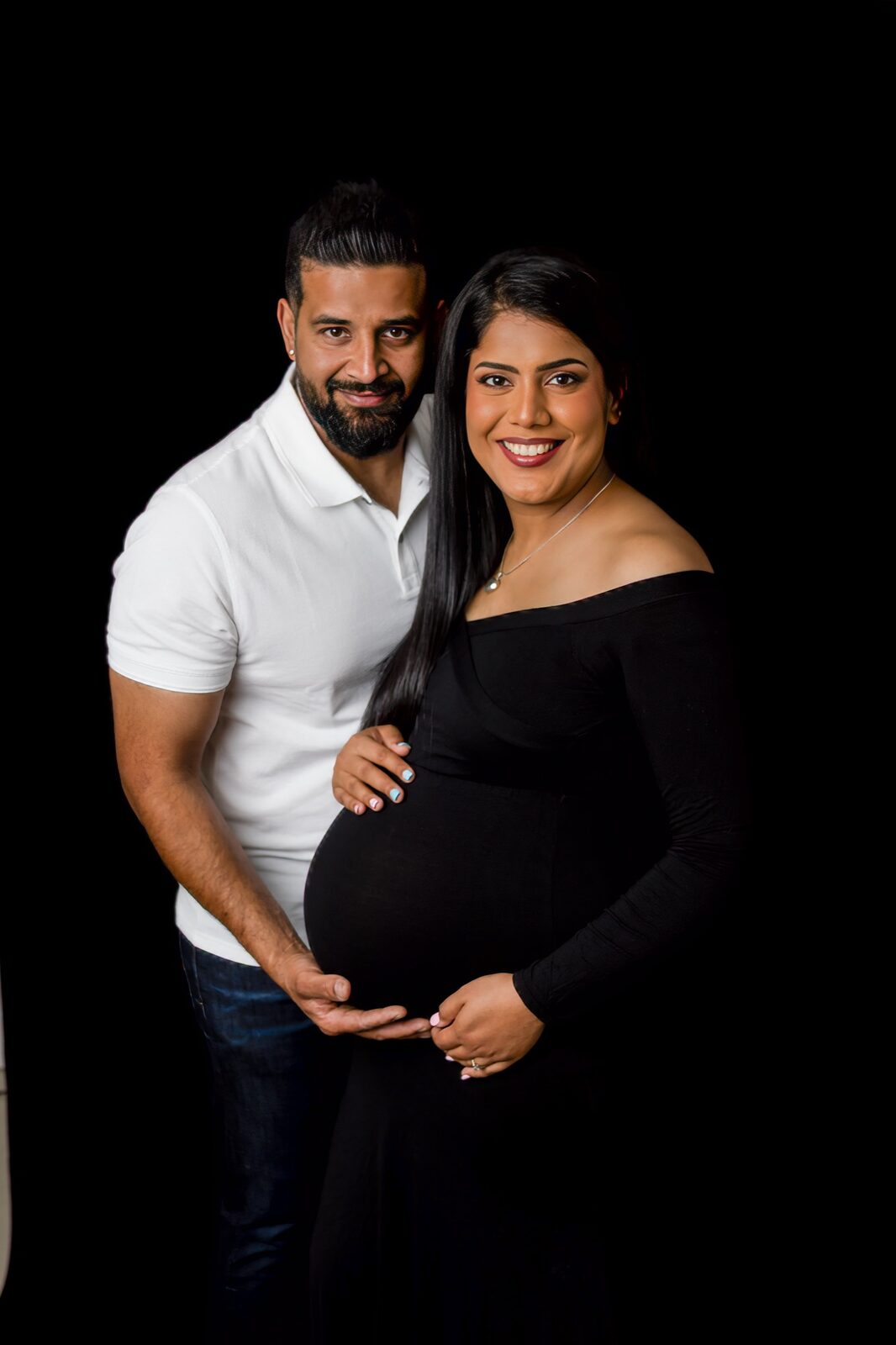
For couples or family sessions, have your partner stand behind you and wrap their arms around the bump, hands resting gently over yours. This creates a protective frame around the belly and tells a visual story of unity that no individual pose can replicate. It is the shot that feels like a narrative, not a product placement.
If you have other children joining the session, this is also the perfect moment to involve them — a hand resting on the belly from a toddler sibling is, frankly, one of the most beautiful things a camera can capture.
---"The best maternity images are never about perfection — they are about presence. Give your body fifteen seconds to settle into a pose, breathe out, and let the tension go. That is the moment the camera is waiting for."---
Standing Poses with Movement: Why Natural Motion Beats Stillness Every Time
Static poses have their place, but movement transforms a great shot into an extraordinary one. The slight motion of fabric, the natural shift of weight, the easy laugh mid-step — these are the elements that make a maternity image feel alive rather than archived.
Walking Poses
- Walk slowly toward the camera while your partner moves a half-step ahead or behind — the gentle offset creates visual rhythm and a sense of shared journey.
- Let fabric move. A flowing dress or open kimono wrap photographs beautifully in motion. Check our thoughts on maternity portrait session ideas for outfit inspiration that works with movement.
- Keep your shoulders back and relaxed — hunching forward is the single most common posture mistake in walking shots and it reads immediately on camera.
- Let your arms swing naturally. Locked arms signal tension and the camera will find it every time.
The 15-Second Rule
One of the most practical tips we give every client: before the shutter fires on any new pose, take fifteen to twenty seconds to settle in. Your body needs that beat to relax out of the transition and into something authentic. The first frame after moving into position almost always shows the pose being thought about rather than lived in. The third or fourth frame is where the magic lives.
Watch your neck and shoulders in particular. Tension collects there first, and it erases the calm, radiant quality that is the whole point of a great maternity image.
---Ready to Celebrate Your Bump in Style?
Faithful Photography's South-West Sydney studios are designed entirely around your comfort — expert posing guidance, professional hair and makeup, and a warm environment where genuine moments happen naturally.
Flattering Angles and Camera Positioning: The Technical Side of Great Pregnancy Photography
Even with the most elegant pose, the camera angle can flatter or undermine everything. Understanding the basics helps you work with your photographer rather than wondering why some shots feel off.
Shoot Slightly Above Eye Level
A camera positioned just above your eye line — even by ten or fifteen centimetres — naturally slims the lower body, draws the eye upward toward your face and the bump, and creates an elegant, lengthening effect through the whole frame. It is one of the oldest and most reliable tricks in portrait photography.
Conversely, shooting from below is almost never flattering in maternity work. It exaggerates the lower body, distorts proportions, and creates a sense of visual heaviness that no one wants in a keepsake image. If your camera angle feels low, mention it — a good photographer will adjust without hesitation.
Focal Length Matters
A 50mm lens is the classic portrait focal length for good reason: it renders the human form honestly and naturally, without the distortion that wider lenses introduce. A 35mm is useful in tighter studio spaces. If a photographer reaches for a very wide angle — 24mm or below — the edges of the frame will distort, and that distortion lands hardest on the bump and hips. Longer focal lengths compress the frame more flatteringly and keep everything looking proportional.
---Props and Furniture: Posing Anchors That Add Depth and Comfort
Good furniture in a studio is not decoration — it is a structural posing tool. When you have something to sit on, lean against, or rest your weight into, your body language immediately relaxes. And relaxed body language photographs in a completely different register from the careful, held stillness of someone who is trying to pose.
Seated Poses
- Sit with one leg extended and the other tucked — it supports the bump naturally and creates a casual, authentic line through the body.
- A cross-legged position on the floor works beautifully with a flowing skirt or dress and photographs with a warmth and intimacy that standing poses rarely achieve.
- Lean slightly forward with your elbows resting on your knees — it draws the bump into the frame and creates a sense of gentle contemplation.
- Chairs with visual interest — a statement armchair, a peacock chair, a low ottoman — add compositional depth without competing with the subject.
Architectural Elements
Doorways and window frames are free compositional tools. Stepping into a doorframe and turning at a slight angle lets the architecture do the compositional heavy lifting — it creates natural leading lines that draw the eye directly to the bump. Large windows provide soft, directional light that is extraordinarily flattering for maternity portraits, and our Gledswood Hills and Glen Alpine studios are both designed to maximise exactly this kind of quality light.
For outdoor sessions in the Macarthur region, natural elements — tree trunks, garden walls, timber fences — serve the same anchoring function. We work with a range of Campbelltown photographers' favourite locations as well as our own private studio environments.
---Wardrobe, Hair and Makeup: Setting the Scene for Your Best Pregnancy Photos
What you wear shapes how every pose reads. Fitted fabrics emphasise the bump's shape; flowing fabrics emphasise movement and softness. Neither is wrong — they simply tell different stories.
What Works on Camera
- Form-fitting jersey or bodycon styles show the bump's sculpture beautifully in profile shots.
- Wrap dresses and open kimono robes work exceptionally well for movement poses — they create sweep and visual interest as you walk.
- Solid colours and subtle textures photograph more cleanly than busy prints, which can compete with the bump for visual attention.
- Earth tones, soft blush, deep navy, and ivory all perform beautifully under studio light and in natural outdoor settings.
For a full guide to outfit coordination and colour palettes, our post on family portrait wardrobe tips covers the principles in detail — most of which apply just as powerfully to maternity sessions.
Professional Hair and Makeup
Professional preparation makes a measurable difference. Our in-studio hair and makeup services are tailored specifically for photography — not the street, not the office — meaning the products, techniques, and finishes are chosen to look natural and radiant under studio lighting rather than washed out or over-lit. Many of our clients cite it as the element that made them feel genuinely confident in front of the camera for the first time.
It also removes one logistical pressure from your morning, which — at this stage of pregnancy — is never a bad thing. Check our session pricing page for details on packages that include hair and makeup.
---Frequently Asked Questions
How do I pose for stunning pregnancy photography if I've never been professionally photographed before?
You don't need any prior experience. At Faithful Photography, we guide you through every pose — where to place your hands, how to shift your weight, when to breathe and relax. Most first-time clients tell us they felt completely comfortable within the first ten minutes. The key is choosing a photographer whose direction you trust, then genuinely following it rather than second-guessing every frame.
What week of pregnancy is best for a maternity photo session?
The sweet spot for most expectant mothers is between 28 and 34 weeks. The bump is beautifully round and prominent, you still have comfortable mobility, and the energy and glow that comes with the second trimester often carries into early third. That said, every pregnancy is different — some clients book as early as 24 weeks, others at 36. We recommend booking early and confirming your exact date as your due date approaches.
Should I include my partner or other children in the session?
Absolutely, and we highly recommend it. Partner cradling poses and sibling involvement create some of the most emotionally resonant images in any maternity gallery. Even if you also want solo shots — which we always include — having your family present for part of the session adds a narrative dimension that solo images alone cannot achieve. If you're planning an extended family shoot, take a look at our extended family sessions for what's possible.
Do I need to bring multiple outfits to my maternity session?
Two to three outfits is a great approach — it gives your gallery variety and lets you tell different visual stories within the same session. A fitted option for profile shots, a flowing dress for movement poses, and perhaps a simpler, more intimate look for close-up bump shots. If you're uncertain what to bring, we're happy to advise during your pre-session consultation.
Can I book a maternity session if I'm in Narellan, Camden or the wider Macarthur area?
Yes — our studios in Glen Alpine and Gledswood Hills are ideally located for clients throughout South-West Sydney, including Campbelltown, Camden, Narellan, Gregory Hills, Harrington Park, and Oran Park. We also serve clients travelling from Liverpool, NSW and surrounding suburbs. You can see location-specific galleries and find us listed as photographers in Narellan and across the broader region.
What comes after the maternity session — can I book a newborn session too?
Many of our maternity clients go on to book a newborn session within the first two weeks of birth — it's a beautiful way to continue the visual story. We recommend registering your interest before your due date so we can hold a tentative newborn spot for you. Learn more about our newborn photography in Sydney and what to expect from those first precious sessions.
Visit Faithful Photography Today
Our Glen Alpine and Gledswood Hills studios are ready to welcome you — guided posing, professional hair and makeup, and a genuinely warm environment where beautiful, authentic maternity images happen every single day. Your bump deserves nothing less.