

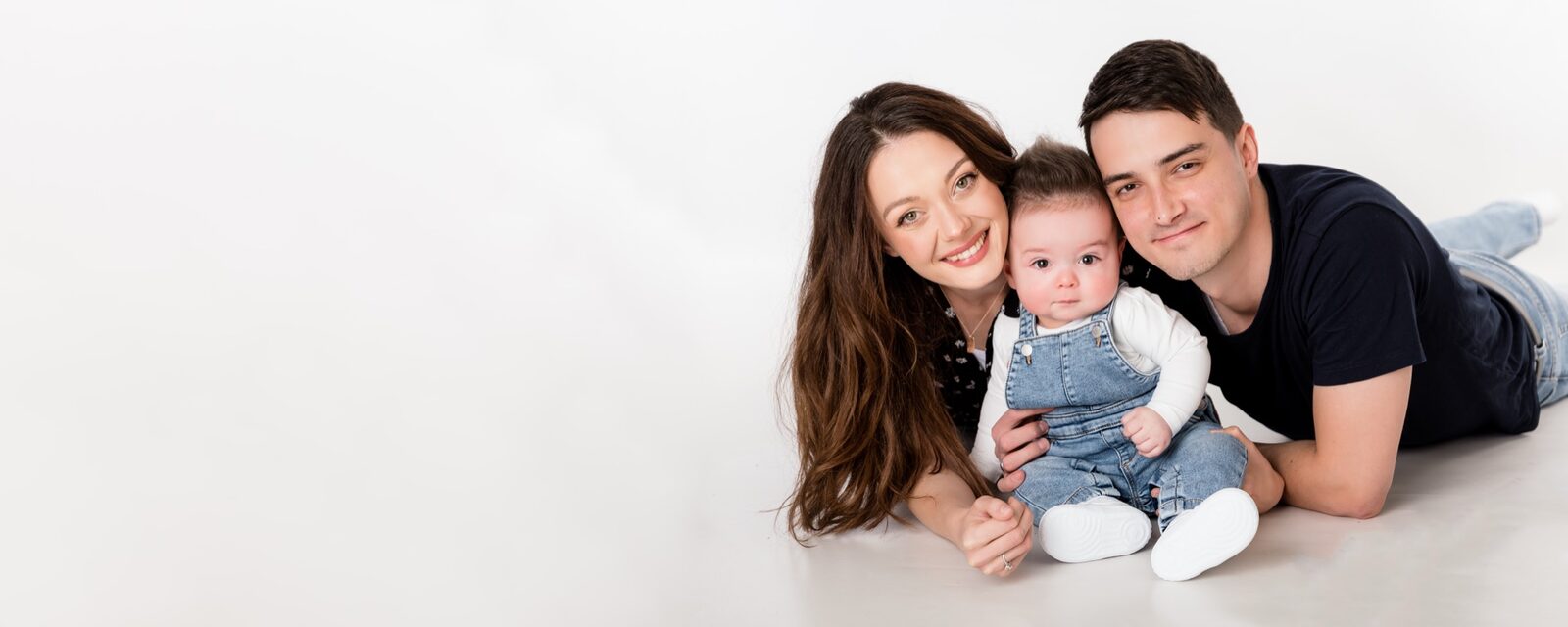
Key Takeaways
- Natural family posing begins with understanding how families genuinely interact — small adjustments in body angle and spacing create warmth that stiff lineups never can.
- Different ages need different approaches: toddlers need proximity to parents, school-age children need a task, teens need space, and adults over fifty benefit enormously from a simple 45-degree turn.
- Thoughtful composition tools — visual triangles, staggered heights, and the three-row rule — keep large group portraits sharp, cohesive and emotionally compelling.
What Makes Family Poses Feel Natural
The most common mistake people make in family portraits is treating the camera like a firing squad. Everyone lines up, faces forward, smiles on command — and the result looks exactly as wooden as it sounds. Authentic posing works the other way around: it starts with how families actually move.Angles Over Frontality
When you observe families in an unguarded moment — at a picnic, walking along a footpath, chatting on the couch — almost nobody stands squarely shoulder-to-shoulder facing the same direction. People naturally angle inward toward one another. Replicating that instinct in a portrait is the fastest route to warmth. The simple act of turning each person's body about 20–30 degrees toward the centre of the group, rather than square to the camera, achieves two things at once: it slims silhouettes and it creates a visual pathway that draws the eye naturally through the image.Visual Triangles and Why They Matter
Experienced portrait photographers lean heavily on triangular composition because it gives a group photograph visual flow. When heads are positioned at different heights — rather than in a single horizontal line — the viewer's eye moves through the frame rather than getting stuck. This also happens to reduce the total number of usable frames needed per session dramatically, because everyone looks intentional and cohesive from the very first shot. ---Reading Body Language to Build Better Poses
Before a photographer even lifts the camera, they should spend a few minutes watching how a family moves together in the studio space. Those natural habits become the blueprint for the session.How Parents and Children Signal Connection
Parents almost always rotate their shoulders inward when speaking with a child — it's an instinctive protective gesture. Siblings, particularly younger ones, tend to mirror each other's posture without realising it. These organic cues are gold for a photographer. Rather than inventing poses from scratch, the job is to refine and slightly exaggerate what's already happening.- Encourage parents to tilt their heads slightly toward their children rather than hold them rigid.
- Let siblings stay in physical contact — a hand on a shoulder, foreheads touching, arms loosely linked.
- Avoid asking people to "just smile." Instead, prompt them with a question or a memory — the genuine reaction is infinitely more photographable.
Height Staggering Without the Awkwardness
Height variation is essential, but a rigid tallest-to-shortest lineup reads like a school photo rather than a portrait. Instead, use gentle curves: have each person step slightly forward or back, allow kids to sit or kneel, use a low stool or step for a parent. The overall silhouette of the group should feel organic — varied but unified. ---Posing Techniques for Children of Every Age
Children are simultaneously the most rewarding and most challenging subjects in a family session. The secret is matching your approach to their developmental stage, not fighting against it.Toddlers and Under-Fives
Children between two and four years old have a realistic attention window of around 15 seconds before something shiny distracts them. Attempting to hold them in a fixed position is a losing battle. Instead:- Place toddlers between their parents' legs or tucked into a lap — proximity to mum or dad is instantly calming.
- Use gentle swaying or weight-shifting to keep small bodies from freezing up.
- Position them at the front of the group so a parent behind can offer a steadying hand quickly and discreetly.
School-Age Children (Five to Twelve)
Once children hit school age, they're old enough to follow a simple brief, and giving them a specific role within the portrait is the most effective posing tool available. Assign them a task: hold your little sister's hand, look at Mum and whisper a secret, count how many freckles are on Dad's nose. They stay engaged, they forget they're being photographed, and the resulting expressions are genuine rather than performative. Avoid placing this age group in a straight line or isolating them at the edges of the frame — both positions tend to produce the thousand-yard stare of someone mentally planning their escape. ---Teen and Adult Positioning That Actually Works
Teenagers in family portraits require a specific kind of diplomacy. They're acutely aware of being watched and rarely comfortable in front of a lens.Giving Teenagers Space and Agency
Position teens toward the outer edges of group compositions rather than sandwiched in the middle, where the scrutiny feels most intense. Leaning casually against a wall, draping an arm across a sibling's shoulder, or sitting slightly apart while still maintaining contact with the group — these all read as confident and relaxed rather than reluctant."The best teen portraits we produce at Faithful Photography happen when we stop asking teenagers to pose and start giving them permission to just be — the camera catches everything in between."
Adults Over Fifty — the 45-Degree Rule
This is one of the most reliable techniques in portraiture, borrowed directly from wedding photography: turning an adult subject to a 45-degree angle relative to the camera creates an instantly slimming effect and improves jawline definition. It's subtle, it's flattering, and clients consistently report higher satisfaction with images taken this way compared to straight-on shots. Seated poses also work particularly well for older adults — one partner seated while the other stands or kneels beside them adds natural variation in height, removes any discomfort about standing posture, and creates a beautiful sense of closeness. ---Essential Posing for Different Family Compositions
A couple portrait, a family of five, and a three-generation extended family all require fundamentally different approaches. Knowing which principles to apply to each saves enormous time during a session.Couples and Young Families
For couples — whether they're newlyweds, established partners, or parents photographed without the children — the goal is to create a sense of connection rather than proximity. Two people standing side by side at the same height, staring directly at the camera, look like a real estate listing photo, not a portrait. Instead: stagger their heights, have the taller partner rest a hand on the other's shoulder or waist, and prompt them to interact — a laugh, a glance, a quiet moment where they're looking at each other rather than the lens. These are the images that get hung on walls.Families With a Baby or Newborn
When a newborn or very young baby is part of the session, the posing hierarchy shifts. A parent should always hold the baby facing the camera — not only because it's safer, but because the baby's face is often what the entire family will treasure most in the image. Tuck newborns snugly against a parent's chest, or cradle them in both hands at chest height for overhead-angle shots. For families expecting, our maternity photography in Sydney sessions use many of the same layered posing principles to create images that feel both intimate and beautifully composed. ---Ready to Capture Your Family's Story?
Our South-West Sydney studios in Glen Alpine and Gledswood Hills are designed to bring out the very best in every family — from bump to baby to big beautiful group portraits.
Managing Large Group Family Sessions
Extended family gatherings — grandparents, aunts, uncles, cousins — are logistically demanding but produce some of the most emotionally powerful portraits imaginable. A few structural rules make the difference between chaos and cohesion.The Three-Row Rule
Never position more than three people deep in a group. Beyond three rows, faces become obscured and depth-of-field becomes genuinely difficult to manage. The classic arrangement places grandparents seated in the centre (they're the reason everyone gathered, after all), parents standing directly behind, and children filling the front row — seated, kneeling, or standing in the gaps.- Set aperture to around f/7.1 for large groups to keep the full depth of the frame sharp.
- Stagger standing adults so that taller individuals don't block shorter ones directly behind them.
- Angle the outer members of each row slightly inward toward the centre — this creates a gentle V shape that draws the eye toward the emotional core of the group.
- Avoid dead space between people; everyone should be in comfortable but genuine contact with those beside them.
Keeping It Moving on the Day
Large group sessions benefit from a pre-agreed shooting order. Start with the hardest configuration — the full group — while energy is highest and small children are still cooperative. Then break down into smaller family units: one set of grandparents with their children, cousins together, individual families. This structure gives everyone a moment of rest while keeping the session progressing efficiently. If you're planning a reunion-style shoot, our extended family sessions are tailored specifically for this kind of multi-generational portrait experience. ---How Wardrobe and Preparation Amplify Your Poses
Even flawless posing can be undermined by clashing outfits, ill-fitting clothes, or colours that compete rather than complement. Wardrobe is part of the posing picture.Colour Coordination Without Matching
Identical outfits create a uniform effect that removes individuality. Instead, choose a palette of two or three complementary tones — a warm neutral, a soft accent colour, and a deeper anchor — and let each family member interpret those tones in their own clothing choices. The result photographs as cohesive without looking costume-like. Our detailed guide to family portrait wardrobe tips covers seasonal palettes, texture mixing, and what to avoid in great depth.Fit Matters More Than Fashion
Well-fitted clothing photographs beautifully regardless of style or price point. Baggy tops obscure body shape and create bulky silhouettes. Anything too tight reads as uncomfortable — and discomfort in clothing translates directly into discomfort in expression. Encourage every family member to wear something they feel genuinely good in, ideally something they've worn before so it feels natural. ---Why Faithful Photography Gets Family Posing Right
Our studios in Glen Alpine and Gledswood Hills — serving Campbelltown, Camden, Narellan, and families right across the Macarthur region — are built around the philosophy that great portraiture comes from genuine relationship, not technical formula. Our photographers spend time with families before the session begins: chatting, letting the children explore the space, observing how the family naturally gravitates together. By the time the camera comes out, we already have a posing plan informed by watching how your family actually interacts — not a generic template applied to every client. Families visiting us from Campbelltown, Camden, and Glen Alpine consistently tell us that what surprised them most was how comfortable and un-posed the session felt — and how alive and authentic the final images look as a result. That's not accident. It's craft. ---Frequently Asked Questions
How do I get my kids to cooperate during a family portrait session?
The most effective approach is to stop asking children to "behave" and start giving them something enjoyable to do. At Faithful Photography, we use movement-based prompts, games, and simple tasks — holding a sibling's hand, whispering something funny to Mum — to keep children engaged without them realising they're being directed. Sessions with toddlers are kept deliberately short, and we build in breaks so little ones never feel overwhelmed.
What's the best way to pose a large extended family group?
Use the three-row rule: no more than three people deep, grandparents seated at centre, parents standing behind, children filling the front. Stagger heights throughout and angle outer members inward toward the group's centre. Start the session with the full group while everyone has the most energy, then break into smaller family units. Our extended family sessions are designed specifically for this kind of multi-generational shoot.
How should teenagers be positioned in family portraits?
Teenagers photograph best when they feel they have some agency in the frame. Position them toward the outer edges of the group rather than the pressured centre, and allow relaxed, casual poses — leaning, an arm around a sibling, sitting slightly apart while still maintaining physical contact with the group. Avoid over-directing teens; a light brief and then space to settle naturally produces far better results than rigid instruction.
Does posing technique matter in an outdoor family session as well as a studio one?
Absolutely — posing principles apply in any setting. In fact, outdoor sessions sometimes require more intentional posing because there's no controlled environment to fall back on. The same rules apply: visual triangles, angled bodies, staggered heights, and movement-based prompts for children. The natural backdrop simply provides a different context for the same compositional thinking.
What should we wear for a family portrait session to make posing look its best?
Choose a coordinated palette of two or three complementary tones rather than identical outfits. Well-fitted clothing in matte or subtly textured fabrics photographs beautifully. Avoid bold logos, busy patterns, or anything that doesn't fit comfortably — discomfort in clothing reads directly on your face. Our full family portrait wardrobe guide covers seasonal palettes and what to avoid in detail.
How long does a typical family portrait session run at Faithful Photography?
Session length varies depending on family size and the package selected. Most family portrait sessions run between 60 and 90 minutes, which allows time for wardrobe changes, a break for little ones, and a variety of poses and compositions. Extended family sessions for larger groups are scheduled with additional time built in. Visit our session pricing page for full details on what each package includes.
Visit Faithful Photography Today
Our award-winning studios in Glen Alpine and Gledswood Hills are welcoming families from Campbelltown, Camden, Narellan and across the Macarthur region every day. Let's create portraits your family will treasure for generations — beautifully posed, genuinely felt, and entirely yours.